There is a particular kind of American landmark that only makes sense once you know who built it and why. Gatling's Chapel, at 10133 South Halsted Street on Chicago's South Side, is one of those places. Drive past it today and you will see a handsome brick funeral home, unremarkable from the street. What most people driving by do not know is that this building changed how an entire industry thought about mourning, and it did it by borrowing an idea from the fast food counter.
The man behind it was Lafayette Gatling Sr., and his path to the funeral business ran through construction, not divinity school or mortuary science. According to his family, Gatling spent years on job sites before he opened his first funeral home in the mid 1980s. That background mattered more than it might seem, because it gave him a working man's eye for a working man's problem.
A problem nobody else in the industry was solving
Traditional visitation asks a lot of people. It asks them to take time off during business hours, to show up in formal clothes, to navigate parking lots and crowded viewing rooms, sometimes on short notice after a long shift. For a construction crew, a factory floor, or anyone else whose job does not come with flexible hours or a suit hanging in the closet, that ask can be the difference between paying respects and missing the chance entirely.
Gatling's wife, Marguerite, later explained the moment the idea clicked for him. He thought about builders like the men he used to work alongside, men who might need to attend a visitation straight from a job site, still in their work clothes, with no time to go home and change. "He said, well, maybe we can do something that they can drive by and see it through a TV monitor," she recalled. He also thought about people with disabilities who struggled with the distance from parking lot to viewing room, and about families who simply could not afford to lose a shift's pay to grieve properly.
So he built a solution most of the funeral industry had never considered: a drive-thru viewing lane.
How it actually worked
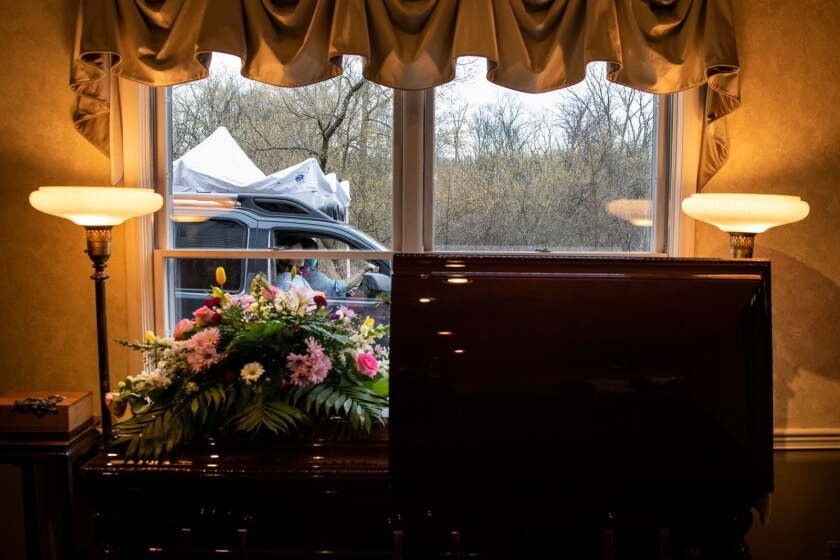
Here is where the real story is even more interesting than the legend that has grown up around it. Gatling's Chapel did not install a window of bulletproof glass looking straight into the viewing room. What it installed was a closed-circuit television setup. A camera inside the funeral home was trained on the casket, and mourners who pulled into the drive-thru lane outside saw that image relayed to a monitor at the window.
Gatling described the mechanics himself to the Chicago Tribune, drawing the comparison to the drive-thru everyone already understood. At a fast food window, he pointed out, you talk into a speaker but you cannot see what you are ordering until it arrives. At his chapel, mourners could see exactly who and what they were there for before they ever said a word. Drivers pulled into a dedicated lane, signed an outdoor guest registry through a retractable drawer much like a bank's drive-up teller window, and viewed the monitor while music played. A memorial box near the lane let visitors leave a card or a contribution without ever leaving their car.
It was not the theatrical curtain and glass tableau that internet retellings sometimes describe. It was something more modest and, in its way, more clever: television repurposed as a bridge between a grieving family and anyone who could not make it inside.
The backlash, and the loyalty
The concept did exactly what you would expect an idea like this to do in the mid 1980s: it made national news, and a good portion of that coverage treated it as a punchline. Traditional funeral directors called it undignified. Commentators outside the community treated a South Side innovation as a novelty act rather than a practical answer to a real problem.
The people the service was actually built for saw it differently. Gatling's Chapel became a fixture in the neighborhood, and the drive-thru lane developed its own loyal following, especially among younger mourners who came through late at night after work or school. Sheila Sterling, who met Gatling when she was still in high school working at a print shop on Halsted Street, remembered him as hands-on to the end, someone who would sit in on services himself to make sure every family was taken care of. Marguerite Gatling has said he was especially attentive to families who could not afford the full cost of a funeral, quietly working with them rather than turning them away.
Gatling's Chapel opened its doors in 1986 and is still operating today under the family's ownership, now with a second location in south suburban South Holland. Lafayette Gatling Sr. passed away in December 2021 at 81, having spent decades building what became one of Chicago's most recognized funeral homes. His legacy now continues through his wife and daughters.
A bigger pattern than one Chicago building
What makes the Gatling's Chapel story worth remembering is not just the novelty of it. It is that Gatling was solving a problem the rest of the industry did not think was worth solving, because the people affected by it were not the people the industry usually built for. Working-class families without flexible schedules. People with disabilities who could not easily navigate a large facility. Families stretched thin financially who needed compassion more than pageantry.
That instinct did not stay confined to one building on Halsted Street. Drive-thru visitation service later appeared at Paradise Funeral Chapel in Saginaw, Michigan, which NPR covered in 2014, and other funeral homes have since adopted variations of the idea, including a Los Angeles chapel that became a popular choice for families concerned about safety at large public gatherings. Gatling's Chapel is widely credited, including by Crain's Chicago Business, as the pioneer that made all of it possible.
There is a lesson in that for anyone paying attention to how innovation actually spreads in Black communities. It rarely starts with venture capital or a splashy launch event. It starts with somebody on the ground, close enough to the problem to see it clearly, deciding to build the fix themselves, whether or not the rest of the world understands it yet.
Why this still matters
Gatling's Chapel is a reminder that dignity and convenience were never actually at odds, no matter how loudly the critics of the 1980s insisted otherwise. A man who once worked construction looked at his community's real constraints and built something around them instead of asking them to disappear. Decades later, the building is still standing, still run by his family, and the idea he was mocked for is quietly considered one of the more compassionate innovations in the history of American funeral service.
That is a legacy worth more than a viral photo caption. It is worth knowing the whole story.